Redefining the Logistics Intelligence Revolution and Reshaping Competitive Advantage
Logistics as a Core Competitive Battlefield
As manufacturing enters the deep stage of lean operations, logistics is no longer a simple “transport function.” It has become a decisive battlefield for core competitiveness.
Under traditional logistics models, heavy reliance on labor, rising costs, and fragmented coordination have constrained countless enterprises in the trade-off between efficiency and expense. Reeman AMR robots break this deadlock through technological innovation, leading the industry from a “tool-based era” into a new era of intelligent collaboration.
A Breakthrough in Operational Efficiency
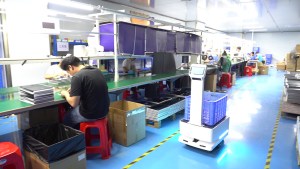
Reeman AMR robots deliver disruptive improvements in efficiency. Unlike human labor constrained by physical limits and working hours, sorting AMRs can operate 24/7 without interruption, achieving over three times the efficiency of manual operations.
In precision manufacturing scenarios such as automotive parts production, carrier-type AMRs enable point-to-point material delivery, eliminating wasted travel time and perfectly aligning logistics flow with production rhythm.
Equipped with intelligent obstacle avoidance and autonomous path planning, multiple robots can operate simultaneously without interference, fully unlocking the efficiency advantages of large-scale deployment.
Dual-Path Cost Reduction: Replacement and Optimization
Reeman AMRs follow a dual approach to cost reduction through labor replacement and operational optimization. With rising labor costs becoming unsustainable, AMRs directly substitute part of the manual workforce.
A real-world case from an automotive parts factory in Shandong showed a 30% reduction in labor costs after deploying Reeman AMRs. At the same time, precise robot handling significantly reduces material damage, while energy-efficient lithium iron phosphate batteries offer a greener alternative to traditional fuel-powered equipment.
Over the long term, enterprises benefit from lower energy consumption, reduced maintenance costs, and improved sustainability.
From Passive Response to Proactive Collaboration
The most fundamental transformation lies in system-level collaboration. Traditional logistics operates as a passive, isolated function, often resulting in “production waiting for materials” or excessive inventory buildup.
By deeply integrating with MES and WMS systems, Reeman AMRs create a proactive, end-to-end intelligent logistics ecosystem. Robots are dispatched in advance based on production plans, replenishment is triggered automatically by inventory data, and production, logistics, and warehousing operate within a unified data loop.
This shift transforms logistics from a cost center into a value-generating engine that supports lean manufacturing at scale.
A Forward-Looking Choice for High-Quality Growth
As logistics intelligence becomes an inevitable trend, Reeman AMR robots not only solve today’s operational challenges but also anticipate future collaboration demands.
With core strengths in precision, coordination, and sustainability, Reeman is redefining competitive standards for logistics equipment. For enterprises pursuing high-quality growth, choosing Reeman AMR is a strategic step toward upgrading logistics and achieving a leap in competitiveness.
In the future, victory in logistics competition will depend on full-chain collaboration capabilities, and Reeman AMR is helping more enterprises become pioneers in this transformation, reshaping the competitive landscape together.
Article Source: Reeman


Comments
Post a Comment