AMR Forklifts Transform Wrapping Tasks with Smart Docking
The Problem: Automated Machines, Manual Delays
In many warehouses, automatic wrapping machines often idle. Why? While they wrap automatically, pallets still arrive via manually scheduled forklifts. This creates inefficient "man-waiting-for-machine" cycles. The solution lies in connecting the equipment.
The Solution: Smart Docking in Action
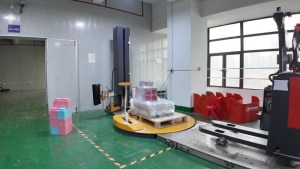
Reeman's AMR forklifts solve this. First, they receive a dispatch order to pick up a pallet. Using LiDAR, they align with millimeter precision. Then, they autonomously drive into the wrapper's docking zone.
Next, a communication module triggers the wrapper to start—no button presses needed. After wrapping, a signal tells the AMR to retrieve the pallet. Finally, it delivers the load to the next stop. This flow eliminates queues and idle time.
Beyond Wrapping: Core AMR Capabilities
This is just one application. These forklifts are built for modern factories.
Flexible Navigation: LiDAR allows quick deployment without floor changes. They dynamically avoid people and obstacles, ensuring steady workflow.
Heavy-Duty Performance: A 1.5-ton capacity handles heavy loads for various tasks, from raw materials to finished goods.
Multi-Floor Logistics: They autonomously use elevators and automatic doors, creating a true end-to-end unmanned loop.
Integrated Safety: Multi-zone lasers and bumpers ensure immediate stop responses for safety.
Creating a Connected Flow
Reeman AMR forklifts integrate isolated steps—like wrapping and transport—into one continuous process. When machines collaborate, efficiency gains become systemic, not just incremental.


Comments
Post a Comment